Practice — 4 min
Designing Quiet Spaces
Silence is not the absence of things. It is the presence of enough space around them.
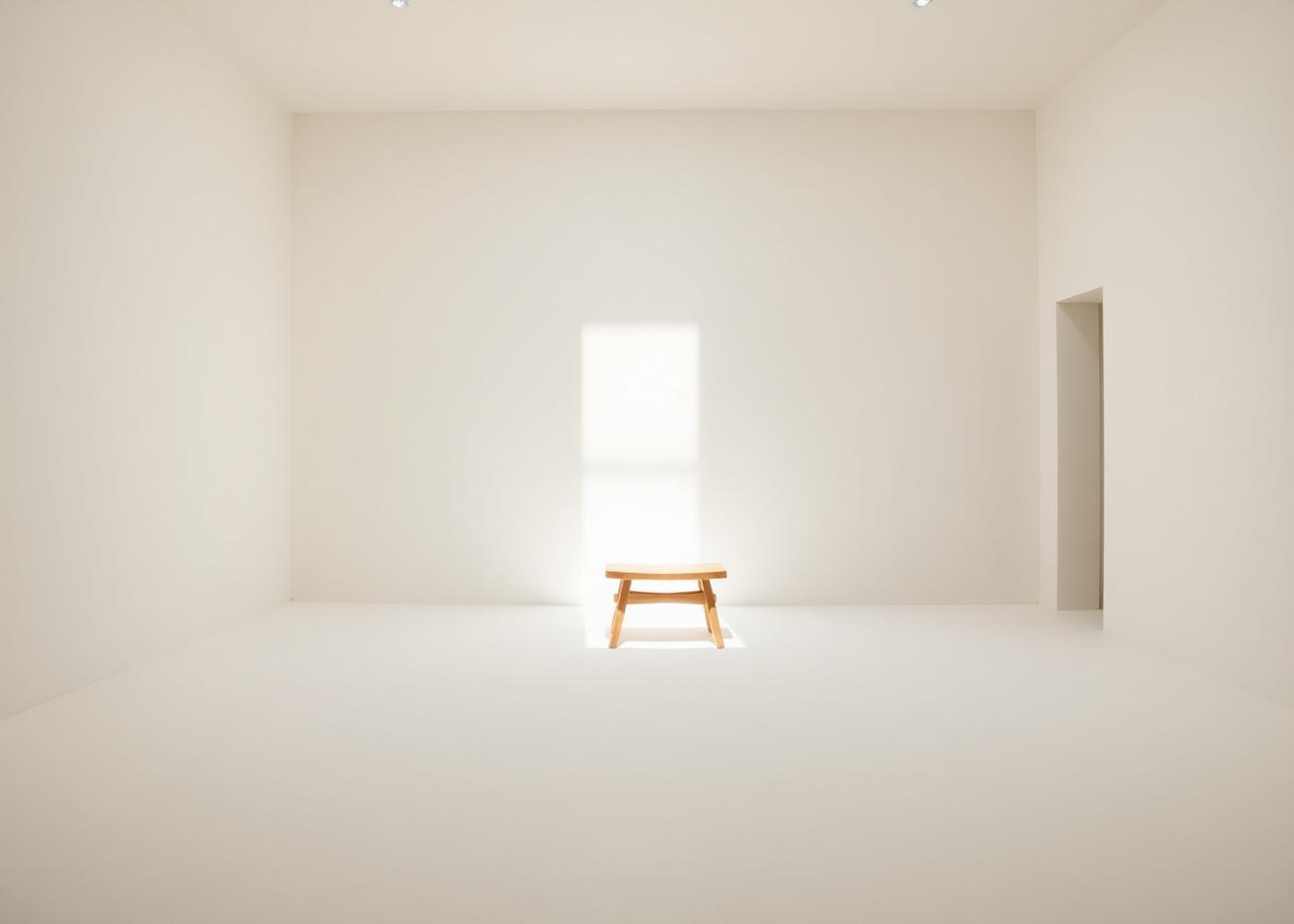
A quiet room is rarely an empty one. It is a room in which nothing competes. Two objects on a long console will read as calm; six of the same objects will read as storage.
Begin with negative space as though it were furniture. Decide where the eye is allowed to rest before deciding what to buy.
Sound matters as much as sight. Hard floors and bare walls make rooms that feel visually serene and physically abrasive. A rug, a heavy curtain, a wall of books — these are acoustic decisions disguised as decorative ones.
Finally, edit at the end of the day, not the beginning. What a room needs is most obvious when you are tired of it.